
Last Updated:
May 23, 2026
Lawn fertilization is meant to create greener grass and healthier lawns, but applying fertilizer incorrectly can create serious problems for your turf. While nutrients are essential for turf development, too much fertilizer, or the wrong type applied at the wrong time, can stress the lawn instead of helping it thrive.
Improper fertilization can weaken roots, burn blades, increase disease, and even create long-term soil imbalances that are difficult to correct. Keep reading to learn how fertilizer damage happens so you can keep your grass healthy and growing strong.
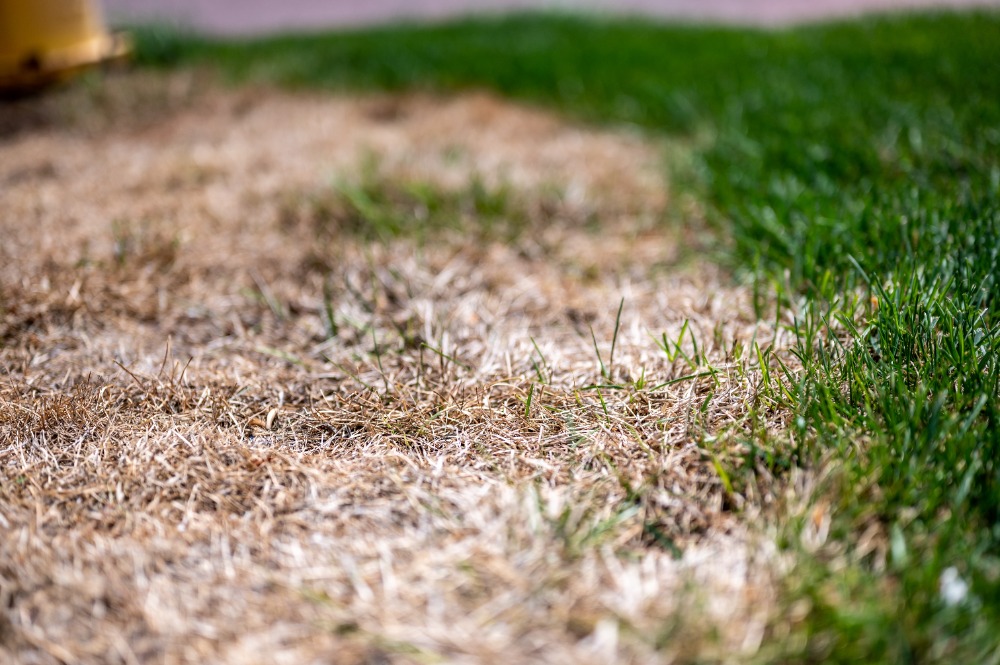
Grass only uses a certain amount of nutrients at one time. When fertilizer is applied excessively, the lawn can become overwhelmed by concentrated salts and nutrients sitting around the root system. Instead of feeding the grass gradually, the fertilizer begins pulling moisture away from the plant tissue.
This process often leads to what’s commonly called “fertilizer burn.” Grass blades may turn yellow, brown, or brittle as the plant loses moisture faster than it can recover. In severe cases, large sections of turf can die off entirely, leaving behind patchy areas that require repair or reseeding.
Fertilizer problems are most common when applications are rushed or poorly timed. Applying heavy fertilizer during extreme heat, drought conditions, or periods of slow growth can place unnecessary stress on the lawn. Grass that is already struggling cannot process nutrients efficiently, making damage more likely.
Fertilizer issues are also common when homeowners apply multiple products too closely together or use equipment that distributes fertilizer unevenly across the lawn surface.
Fertilizer damage doesn’t always appear immediately, but lawns usually begin showing signs of stress within days after an improper application. In some cases, the symptoms resemble drought stress or disease, which can make the problem difficult to identify at first.
Common signs of fertilizer damage:
One of the lesser-known effects of excessive fertilization is its impact on root development. Grass that receives too much nitrogen often focuses heavily on producing blade growth above the soil while neglecting root expansion below the surface.
This imbalance can leave the lawn looking temporarily lush while actually becoming weaker underneath. Shallow roots struggle during hot weather and dry conditions because they cannot reach deeper moisture reserves. Eventually, the lawn becomes increasingly dependent on constant watering and additional treatments to stay healthy.
The timing of fertilizer applications plays a major role in how safely nutrients are absorbed. Grass actively growing during its preferred season can usually process fertilizer efficiently, while dormant or stressed turf cannot.
Applying fertilizer at the wrong time of year may force unnatural growth during periods when the lawn should be conserving energy. This creates unnecessary strain and increases vulnerability to heat stress, disease, and environmental damage.
Many fertilizer-related lawn problems come down to application errors rather than the fertilizer itself. Even high-quality products can damage turf if they’re used improperly or without understanding the lawn’s actual needs.
Frequent fertilizer mistakes include:
Water is essential for helping fertilizer move into the soil and away from the grass blades. Without enough moisture, fertilizer granules may remain concentrated on the turf surface, increasing the likelihood of burning.
At the same time, excessive watering can wash nutrients away before the lawn has a chance to absorb them. Proper irrigation helps balance nutrient absorption while minimizing stress on the grass.
Professional lawn care providers typically base fertilizer applications on grass type, seasonal timing, soil conditions, and nutrient requirements rather than applying products generically. This reduces the risk of overapplication and helps ensure the lawn receives nutrients in a controlled, balanced way.
Professionals also use calibrated equipment designed to distribute fertilizer evenly across the property. Uneven applications are one of the biggest reasons homeowners experience streaking, burning, or inconsistent lawn color after fertilizing.
Fertilizer can be extremely beneficial when applied correctly, but successful fertilization requires moderation and consistency rather than excess. Healthy lawns respond best to balanced feeding schedules that support gradual growth without overwhelming the turf.
To reduce the risk of fertilizer damage:
Many lawn problems begin with the assumption that more fertilizer automatically equals a greener, healthier lawn. In reality, excessive fertilization often creates unstable growth that weakens turf rather than strengthening it.
Healthy grass depends on balance. Proper mowing, watering, soil health, and fertilization all work together to support sustainable growth. When fertilizer is applied thoughtfully, it improves lawn performance. When overused or mistimed, it can quickly become one of the biggest sources of lawn stress and damage.
Q: Can fertilizer actually kill grass?
A: Yes. Excessive fertilizer can burn grass and cause severe turf damage or death if overapplied.
Q: What does fertilizer burn look like?
A: Fertilizer burn usually appears as yellow, brown, or scorched-looking patches shortly after application.
Q: Is too much nitrogen bad for lawns?
A: Yes. Excess nitrogen can promote weak top growth while reducing root strength and increasing stress vulnerability.
Q: Should grass be watered after fertilizing?
A: In most cases, yes. Water helps move fertilizer into the soil and reduces the risk of burning.
Q: Can uneven fertilizer application damage lawns?
A: Absolutely. Overlapping spreader passes can create concentrated areas that burn or discolor the grass.
Q: How long does it take for grass to recover from fertilizer damage?
A: Minor damage may improve within a few weeks, while severe fertilizer burn can require reseeding or extended recovery time.

How To Tell The Difference Between Lawn Disease & Drought Damage
Damage from lawn diseases looks similar to drought damage on your grass, but knowing how to spot the differences allows you to treat the problem correctly.
Learn MoreHow Lawn Mowing Can Affect Lawn Pest Problems
This blog post explores the connection between lawn mowing and pest problems in your lawn so you can keep your turf pest-free after cutting the grass.
Learn MoreThe Pros & Cons Of DIY Lawn Fertilization
Applying fertilizer to your own lawn could end up doing more harm than good if you don't know what you're doing. Come learn more in this blog post!
Learn More
Looking for a reliable lawn care company or someone who provides a quality pest control program? Look no further because here at Holmes, we are your lawn and pest experts. You’re happy or it’s free guaranteed.