
Last Updated:
June 26, 2026
It's easy to assume a struggling lawn simply needs more fertilization or additional watering. In many cases, though, the real problem lies beneath the grass. As soil becomes compressed over time, the tiny air pockets that roots rely on begin to disappear. Water has a harder time soaking into the ground, nutrients stay near the surface, and your lawn’s roots struggle to grow beyond the upper few inches of soil.
Aeration is designed to relieve this compaction, and several factors can help you determine whether your lawn is in need of aeration services. If several of the following symptoms sound familiar, improving your soil structure may be the next step toward a healthier lawn.
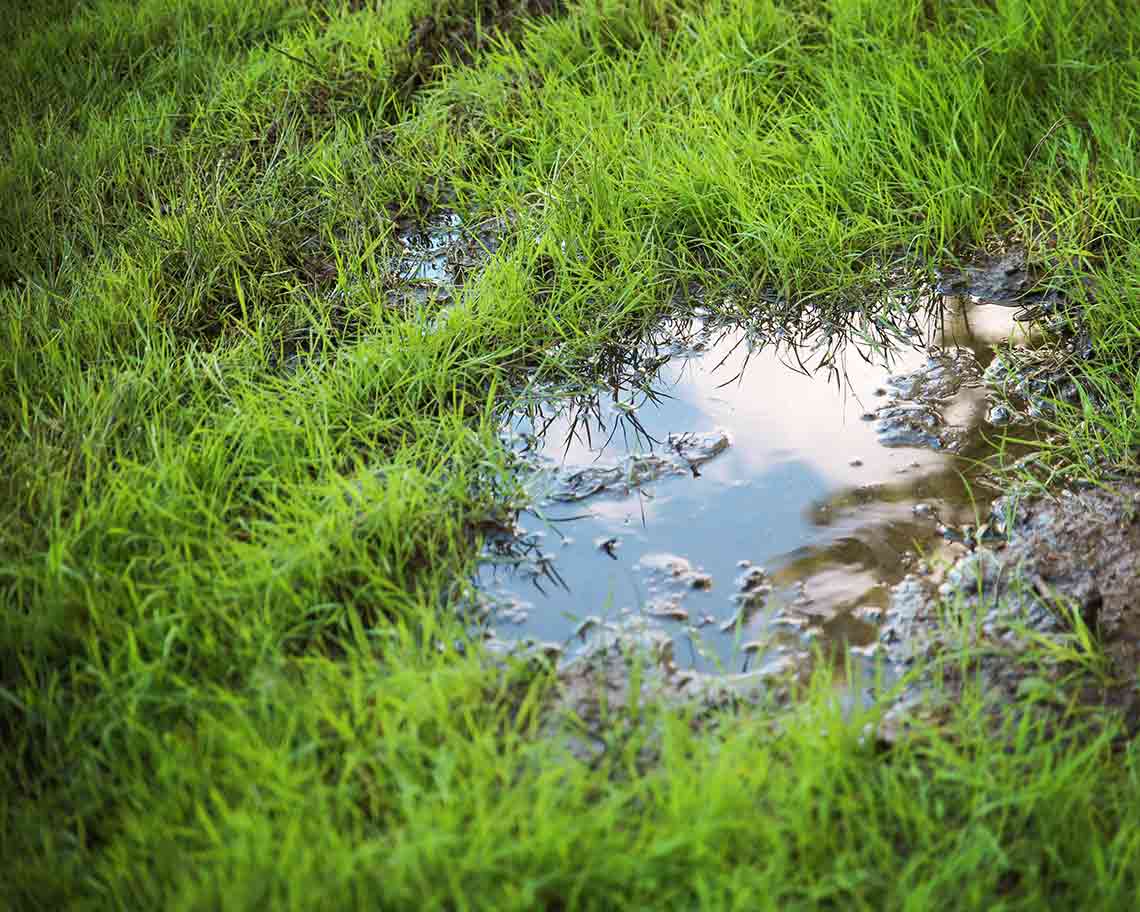
After a moderate rainfall, your lawn should gradually absorb the moisture. If puddles remain for hours or water flows across the yard instead of disappearing into the soil, compaction is often the reason.
When the ground becomes too dense, water can't move downward efficiently. Instead, it collects on the surface or runs off into nearby sidewalks, driveways, and landscaping beds. This leaves the roots surprisingly dry despite the amount of water your lawn receives.
The Role of Aeration: Aeration creates openings throughout the lawn that allow water to penetrate deeper into the soil, reducing runoff while improving moisture availability around the roots.
One subtle sign of compacted soil is a lawn that doesn't bounce back after being walked on. If footprints remain visible long after you've crossed the yard, the grass may not have enough healthy root support to spring upright again.
This often happens when roots are confined to the upper layer of compacted soil. Instead of producing vigorous, resilient turf, the grass becomes flattened more easily and recovers much more slowly from everyday activity.
The Role of Aeration: By encouraging deeper root development, aeration strengthens the turf from below, making grass blades more resilient and better able to recover after foot traffic.
Many homeowners increase their watering schedule when the lawn begins looking dry. Unfortunately, additional irrigation won't solve the problem if the water never reaches the root system.
Compacted soil slows water infiltration, causing much of your irrigation to evaporate or run off before it can be absorbed. As a result, the lawn may still appear drought-stressed despite receiving plenty of water.
The Role of Aeration: Aeration improves the movement of water through the soil, allowing irrigation to reach deeper roots and making each watering cycle more productive.
A thick, healthy lawn naturally crowds out many common weeds. When the turf begins weakening because of compacted soil, unwanted plants often seize the opportunity to establish themselves.
You may notice weeds appearing repeatedly in the same thin areas even after treatment. While herbicides remove existing weeds, they don't address the conditions that allowed those weeds to invade in the first place.
The Role of Aeration: Healthier soil promotes thicker grass growth, allowing the lawn to compete more effectively and reduce the amount of open space available for weed seeds to germinate.
Although compacted soil is a common problem, excessive thatch can produce similar symptoms for entirely different reasons.
If your lawn feels unusually spongy when you walk across it, a thick layer of undecomposed stems and roots may have accumulated between the grass and the soil. This layer interferes with water movement, limits oxygen exchange, and creates an environment that favors insects and turf diseases.
The Role of Aeration: Lawn aeration helps improve airflow beneath the turf while encouraging microorganisms that naturally break down excess thatch over time.
Some sections of the lawn experience much heavier use than others. Entryways, backyard gathering spaces, pet runs, and paths between gates often receive thousands of footsteps throughout the year.
These locations tend to compact much faster than the rest of the yard, causing the grass to thin out long before problems appear elsewhere. If these high-use areas consistently look worn despite regular lawn care, soil compaction is likely contributing to the issue.
The Role of Aeration: Relieving compaction in these heavily traveled zones allows roots to expand again, helping the grass recover and blend in with the surrounding lawn.
A quality fertilizer program should noticeably improve lawn color, density, and overall growth. If those improvements have become less noticeable over time, compacted soil may be preventing nutrients from reaching the root system.
Instead of moving into the soil, fertilizer can remain near the surface where it's less available to the grass. This reduces the effectiveness of every application and leaves the lawn looking underwhelming despite proper maintenance.
The Role of Aeration: Aeration increases nutrient penetration by opening channels into the soil, allowing fertilizer to reach the roots where it can be absorbed more efficiently.
Q: Does every lawn need aeration?
A: No. Lawns with loose, healthy soil and very little foot traffic may not require regular aeration. The need depends on your soil conditions rather than a fixed schedule.
Q: Can aeration improve drainage problems?
A: Yes. Compacted soil often contributes to standing water and runoff. Aeration improves water infiltration and helps moisture move into the roots.
Q: Should I overseed after aerating?
A: Absolutely. The holes created during aeration provide excellent seed-to-soil contact, making overseeding much more successful.
Q: Is aeration helpful for clay soil?
A: Clay soils compact more readily than sandy soils, making them some of the biggest beneficiaries of routine aeration.
Q: How soon will my lawn improve after aeration?
A: Better water absorption is often noticeable within days, while thicker growth and stronger root development usually become evident over the following several weeks as the lawn actively grows.

The Pros & Cons Of DIY Lawn Fertilization
Applying fertilizer to your own lawn could end up doing more harm than good if you don't know what you're doing. Come learn more in this blog post!
Learn MoreIs Your Mulch Attracting Pests?
If you have bugs and pests all over your lawn, your old mulch may be the problem. Come find out how old, decaying mulch can attracts pests to your yard.
Learn MoreShould You Water Your Lawn After Fertilization?
What you do after fertilizing your lawn is crucial to the effectiveness of the application. Come read all about watering-in lawn fertilizers after treatments.
Learn More
Looking for a reliable lawn care company or someone who provides a quality pest control program? Look no further because here at Holmes, we are your lawn and pest experts. You’re happy or it’s free guaranteed.