Last Updated:
September 30, 2026
Mowing does more than keep grass at a manageable height. The way a lawn is maintained can influence the conditions that insects find attractive and the ability of turf to recover when pests begin feeding. Grass that is regularly maintained has a better chance of staying dense and vigorous, while neglected or stressed turf can become easier for certain lawn pests to damage.
Keeping turf at an appropriate height, removing excessive growth, and avoiding unnecessary stress can make the lawn less vulnerable to pest-related damage. Keep reading for more, and be sure to check out our lawn pest control services for even more help.
Mowing can influence pest activity, although it is not a substitute for targeted pest control. Overgrown grass provides additional shelter near the soil surface and can create a more protected environment for insects and other pests. Tall, dense vegetation around the lawn can also make it easier for some pests to remain hidden.
Regular mowing changes that environment while helping the turf remain healthy enough to withstand minor feeding damage. It can also make certain signs of pest activity easier to spot because the grass stays more uniform and accessible for inspection.
Mowing can contribute to pest management by:
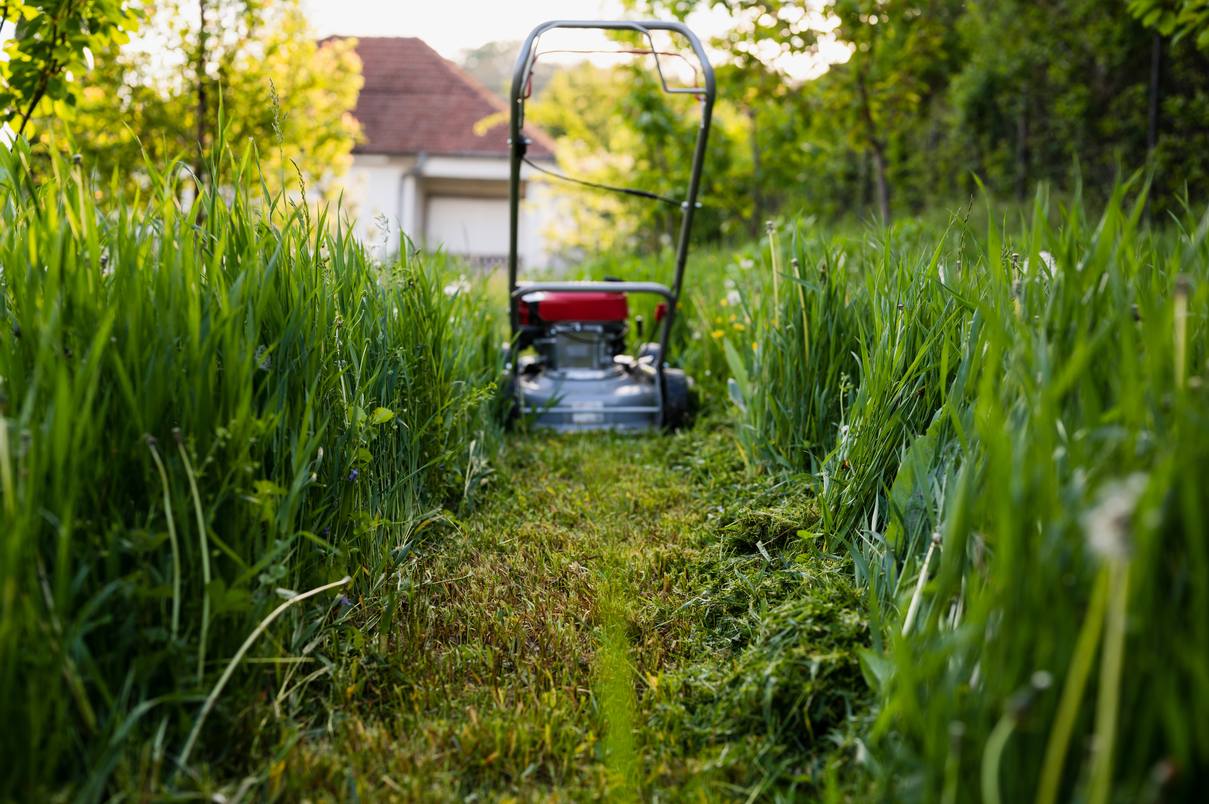
Grass height affects the environment immediately above the soil. Very tall growth can create additional shade and shelter, while extremely short grass exposes the soil and places additional stress on the turf. Neither extreme is ideal for maintaining a resilient lawn.
The appropriate mowing height depends on the type of grass, growing conditions, and time of year. Maintaining that range gives the lawn enough leaf area to support healthy growth without allowing it to become excessively tall.
Maintaining an appropriate height can:
A thick lawn has more living grass covering the soil, giving individual plants greater support when they experience environmental or insect-related stress. Turf that is already thin from poor mowing, drought, compaction, or other problems may show damage much faster when pests begin feeding.
This is one reason mowing should be viewed as part of regular lawn maintenance rather than an isolated cosmetic task. Consistent care helps maintain the turf conditions that allow grass to recover when problems arise.
A well-maintained lawn can provide:
The goal isn't simply to cut the grass as often as possible. Mowing should be adjusted to the turf's growth rate and grass type so that the plants aren't repeatedly stressed. Removing excessive amounts of leaf tissue can weaken grass and leave it less capable of recovering from insect activity.
Mowing supports better lawn health when:
A lawn that is repeatedly scalped or allowed to become severely overgrown can become stressed before insects even enter the picture. Cutting too aggressively removes valuable leaf tissue and reduces the plant's ability to produce energy. Waiting too long between cuts can create a different problem by allowing grass to become excessively tall before a large amount of growth is removed.
Stress does not automatically cause an insect infestation, but weakened turf can have a harder time recovering once pests begin feeding. Areas with poor mowing practices may therefore show more noticeable thinning or discoloration when insect pressure is present.
Other mowing-related problems include:
Mowing should be one part of a broader lawn care strategy when insect problems are a concern. Start by keeping the turf healthy and watching for changes that could indicate pest activity. Look for thinning areas, chewed blades, unusual discoloration, or sections that deteriorate without an obvious mowing or watering explanation.
To make mowing part of a stronger pest management routine:
Mowing is not an insect treatment, but it can contribute to a healthier lawn that is better prepared to deal with pest pressure. Keeping grass at a suitable height and maintaining a consistent schedule reduces avoidable stress while making changes in the turf easier to identify.
When mowing is combined with regular inspections, proper watering, fertilization when needed, and targeted pest treatments, it becomes part of a more complete approach to maintaining healthy turf.
Q: Does mowing kill lawn pests?
A: Mowing does not generally eliminate established lawn pests. It can improve turf conditions and make pest activity easier to identify, but specific infestations may require targeted treatment.
Q: Can overgrown grass attract more pests?
A: Overgrown vegetation can provide additional shelter for some insects and make pest activity more difficult to detect. Keeping the lawn maintained helps reduce these conditions.
Q: Can mowing too short make my lawn more vulnerable to pests?
A: Yes. Cutting grass excessively short can create significant plant stress, making the turf less capable of recovering from insect feeding and other environmental pressures.
Q: Should I mow if my lawn already has pest damage?
A: Usually, yes, provided the grass is actively growing and conditions are appropriate for mowing. However, avoid removing excessive amounts of already stressed turf in a single cut.
Q: Can lawn pests cause damage that looks like a mowing problem?
A: Yes. Insect feeding can create thinning, discoloration, and irregular patches that may be mistaken for problems caused by mowing, drought, or irrigation.
Q: Is mowing enough to prevent lawn pest infestations?
A: No. Proper mowing supports healthy turf but does not replace pest monitoring or treatments when an infestation develops. A complete lawn care program may be needed to address persistent pest problems.

How To Tell The Difference Between Lawn Disease & Drought Damage
Damage from lawn diseases looks similar to drought damage on your grass, but knowing how to spot the differences allows you to treat the problem correctly.
Learn MoreHow Lawn Mowing Can Affect Lawn Pest Problems
This blog post explores the connection between lawn mowing and pest problems in your lawn so you can keep your turf pest-free after cutting the grass.
Learn MoreThe Pros & Cons Of DIY Lawn Fertilization
Applying fertilizer to your own lawn could end up doing more harm than good if you don't know what you're doing. Come learn more in this blog post!
Learn More
Looking for a reliable lawn care company or someone who provides a quality pest control program? Look no further because here at Holmes, we are your lawn and pest experts. You’re happy or it’s free guaranteed.