
Last Updated:
September 30, 2026
While a lack of water is a common reason grass loses its green color, fungal infections and other lawn diseases can produce similar symptoms. Treating the wrong problem can waste time and money while allowing the actual cause of the damage to get worse.
Drought damage typically develops when grass cannot access enough moisture to support normal growth, while lawn diseases often spread under specific environmental conditions and may produce distinct patterns or markings on individual blades. Keep reading to learn how to spot these differences for proper lawn treatment.

When grass doesn't receive enough water, it begins conserving moisture to survive. Growth slows, blades lose their usual firmness, and the lawn may gradually shift from green to dull green, grayish-blue, yellow, or brown. Dry conditions can affect large portions of the yard, particularly areas exposed to direct sunlight or growing in shallow, compacted soil.
One of the earliest warning signs is grass that remains flattened after someone walks across it. Healthy grass generally springs back, while dehydrated turf may retain footprints because its blades have lost moisture and flexibility.
Common signs of drought damage include:
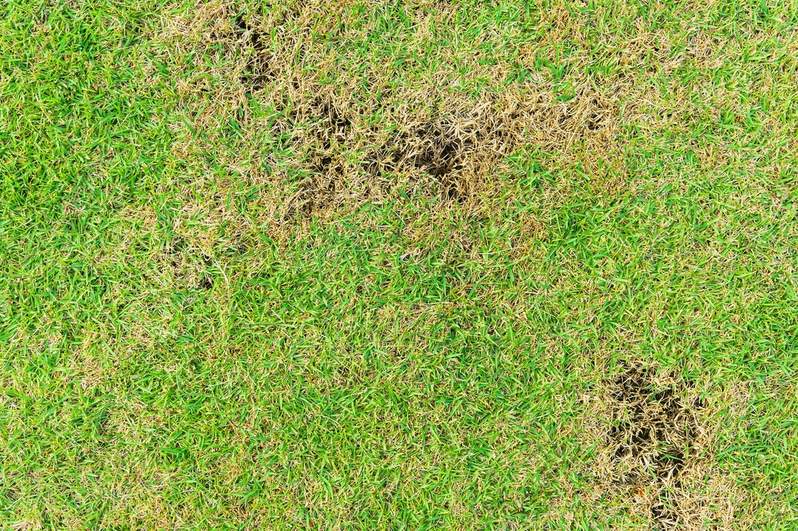
Lawn diseases develop when susceptible grass encounters a pathogen under favorable conditions. Fungi cause many common turf diseases, although other pathogens can also affect grass. Depending on the disease, symptoms may appear as irregular brown patches, circular spots, discolored blades, or areas where the grass gradually thins.
Unlike drought damage, lawn disease may develop even when the soil contains sufficient moisture. Some infections become more active during humid weather, prolonged rainfall, or warm nights, while others favor cooler conditions. Certain diseases also produce visible signs on individual blades, such as lesions, dark margins, or fungal growth.
Signs that may point toward lawn disease include:
Before applying a fungicide or other treatment, check whether the grass is actually experiencing moisture stress. Surface appearance alone can be misleading because some lawns turn brown from disease even when the soil is wet.
Examine the soil in several affected areas rather than relying on a single spot. If the ground is dry several inches below the surface and the grass shows signs of wilting, insufficient moisture may be contributing to the problem. You should also inspect your irrigation system for clogged sprinkler heads, uneven coverage, or broken lines that leave certain sections without enough water.
To evaluate possible drought damage:
Adding more water may help drought-stressed grass, but it won't necessarily resolve a fungal infection. In some situations, frequent irrigation can make certain diseases worse by keeping grass blades wet for extended periods or increasing moisture around the turf.
The timing and duration of watering matter. Irrigating early in the morning generally allows grass to dry during the day, whereas evening watering can leave blades wet overnight. Poor drainage, dense thatch, and limited airflow can also create conditions that favor some lawn diseases.
If you suspect an infection, avoid automatically increasing irrigation. Instead, assess the soil, review recent weather conditions, and look for symptoms that distinguish disease from ordinary moisture stress.
The distribution of damaged grass can help narrow down the cause. Drought often affects areas with high water demand, including sunny slopes, shallow soil, and locations where sprinkler coverage is inadequate. However, uneven irrigation and soil conditions can create smaller dry patches that resemble disease.
Lawn diseases may form recognizable patterns, although their appearance varies by pathogen and grass species. Some infections create expanding circles, while others follow drainage patterns or appear in scattered clusters. Neither circular patches nor irregular edges alone confirm a diagnosis.
Pay attention to where the damage starts and how it changes over time:
Once you have identified the likely cause, focus on correcting the conditions responsible for the damage. Drought-stressed grass generally needs appropriate irrigation and time to recover, while disease management depends on the specific pathogen, grass variety, and severity of the infection.
Recovery practices should match the problem rather than follow a one-size-fits-all approach. For healthier turf recovery:
Q: Can lawn disease look exactly like drought damage?
A: Yes. Both can cause yellowing, browning, and thinning. Soil moisture, blade symptoms, and the pattern of affected areas can help distinguish them.
Q: Will brown grass turn green again after watering?
A: Grass that is still alive may recover after receiving sufficient moisture. Grass that has died from prolonged drought may require reseeding or replacement.
Q: Does watering a lawn more often prevent lawn disease?
A: Not necessarily. Excessive irrigation can favor certain fungal diseases, especially when grass remains wet overnight or drainage is poor.
Q: How can I tell if brown spots are caused by fungus?
A: Look for blade lesions, unusual patch patterns, or fungal growth, and consider recent weather conditions. These signs can suggest disease, but an accurate diagnosis may require professional inspection.
Q: Should I apply fungicide to brown patches just in case?
A: No. Fungicides target specific diseases and may be ineffective when browning is caused by drought, irrigation problems, or other conditions.
Q: How long does it take for drought-damaged grass to recover?
A: Mildly stressed grass may improve within several days of adequate watering, while severe damage can take weeks or longer. Dead turf will not recover without repair or replacement.

How To Tell The Difference Between Lawn Disease & Drought Damage
Damage from lawn diseases looks similar to drought damage on your grass, but knowing how to spot the differences allows you to treat the problem correctly.
Learn MoreHow Lawn Mowing Can Affect Lawn Pest Problems
This blog post explores the connection between lawn mowing and pest problems in your lawn so you can keep your turf pest-free after cutting the grass.
Learn MoreThe Pros & Cons Of DIY Lawn Fertilization
Applying fertilizer to your own lawn could end up doing more harm than good if you don't know what you're doing. Come learn more in this blog post!
Learn More
Looking for a reliable lawn care company or someone who provides a quality pest control program? Look no further because here at Holmes, we are your lawn and pest experts. You’re happy or it’s free guaranteed.